Waste management is something most businesses don’t think much about until costs start adding up or operational issues begin affecting productivity. Whether you’re running a restaurant, warehouse, apartment complex, retail store, manufacturing facility, or distribution center, the way you handle waste can significantly impact your bottom line.
As businesses in Albuquerque continue looking for ways to improve efficiency and reduce operating expenses, many owners find themselves asking an important question:
Should we rent or buy a compactor or baler?
It’s a smart question because commercial waste equipment is an investment. Choosing the right option can help reduce hauling costs, improve workplace cleanliness, increase recycling efficiency, and even generate revenue through recyclable materials.
In this guide, we’ll explore the pros and cons of renting versus buying waste equipment, examine compactor rental costs, discuss baler lease options, and help you determine the best solution for your business.
Understanding Compactors and Balers
Before comparing leasing and ownership, it’s important to understand what these machines do.
What Is a Compactor?
A compactor compresses waste materials to reduce their volume.
Instead of filling a dumpster with loose trash, a compactor squeezes waste into a much smaller space. This allows businesses to store more waste before requiring pickup.
Common users include:
- Restaurants
- Grocery stores
- Hotels
- Apartment complexes
- Warehouses
- Manufacturing facilities
Compactors help reduce hauling frequency and improve waste management efficiency.
What Is a Baler?
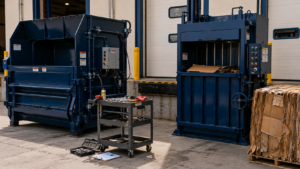
A baler compresses recyclable materials into dense, manageable bundles known as bales.
Common materials include:
- Cardboard
- Plastic
- Paper
- Aluminum
Balers help businesses:
- Reduce recycling costs
- Save storage space
- Improve recycling efficiency
- Generate revenue from recyclable materials
Many Albuquerque businesses use balers to manage shipping and packaging waste.
Rent vs Buy Compactor: The Big Decision
Let’s look at the two primary options.
Option 1: Lease or Rent a Compactor
Leasing waste equipment has become increasingly popular because it provides businesses with flexibility and predictable costs.
Instead of making a large upfront investment, companies pay monthly fees for equipment use.
Benefits of Leasing Waste Equipment
Lower Upfront Costs
One of the biggest advantages of leasing waste equipment in Albuquerque is avoiding a significant capital expense.
Instead of spending tens of thousands of dollars upfront, businesses can spread costs over manageable monthly payments.
This preserves cash flow and frees up capital for other investments.
Predictable Monthly Budgeting
Monthly lease payments make budgeting easier.
Instead of unexpected repair bills or equipment replacement costs, businesses often have a fixed monthly expense.
Predictable budgeting is particularly helpful for:
- Growing businesses
- Seasonal businesses
- Multi-location operations
Easier Equipment Upgrades
Technology changes.
Waste handling needs change.
Businesses grow.
Leasing allows companies to upgrade equipment more easily when their needs evolve.
This flexibility is one of the strongest arguments for leasing waste equipment.
Maintenance Options May Be Included
Many leasing programs include maintenance agreements.
This can provide:
- Scheduled service
- Preventative maintenance
- Reduced repair expenses
- Faster response times
For businesses without internal maintenance teams, this can be a major advantage.
Reduced Financial Risk
Leasing minimizes long-term commitment.
If your waste volume changes significantly, leasing provides more flexibility than ownership.
This is particularly beneficial for:
- New businesses
- Expanding companies
- Businesses testing new locations
Disadvantages of Leasing a Compactor
While leasing has many benefits, there are some drawbacks.
Higher Long-Term Costs
Over many years, lease payments may exceed the purchase price of the equipment.
Businesses planning to use the same equipment for a decade or longer may spend more through leasing.
No Ownership Equity
At the end of the lease term, the equipment generally belongs to the leasing company.
Unless there’s a buyout option, businesses don’t build ownership value.
Contract Commitments
Some leasing agreements require minimum contract terms.
Before signing any lease agreement, carefully review:
- Lease length
- Maintenance responsibilities
- Early termination fees
- Upgrade options
Buying a Compactor: Ownership Advantages
For some businesses, purchasing equipment makes more sense.
Let’s look at why.
Full Ownership
Once the equipment is paid for, it belongs to your company.
There are no monthly lease payments.
You control:
- Maintenance schedules
- Equipment modifications
- Long-term usage
Lower Lifetime Cost
For businesses using equipment for many years, ownership can be less expensive overall.
After the initial purchase cost, ongoing expenses are generally limited to:
- Maintenance
- Repairs
- Occasional upgrades
Potential Tax Benefits
Depending on current tax laws and business structure, equipment purchases may offer depreciation benefits.
Consult a tax professional to understand current opportunities.
Greater Long-Term Stability
If your waste generation is predictable and unlikely to change, ownership may provide better long-term value.
Businesses with stable operations often benefit from purchasing equipment outright.
Disadvantages of Buying a Compactor
Ownership isn’t perfect.
Large Upfront Investment
Commercial compactors can represent a significant capital expense.
Many businesses prefer preserving cash flow rather than tying up large amounts of money in equipment.
Maintenance Responsibility
When you own equipment, repairs become your responsibility.
Unexpected failures can create:
- Downtime
- Emergency service costs
- Replacement part expenses
Technology Obsolescence
Waste equipment evolves over time.
Purchased equipment may eventually become outdated or less efficient than newer models.
Baler Lease Options vs Buying a Baler
The same principles apply to balers.
When Leasing a Baler Makes Sense
Baler lease options are often ideal when:
- Cardboard volume fluctuates
- Business growth is expected
- Capital is limited
- Equipment needs may change
Leasing allows businesses to scale operations without major financial commitments.
When Buying a Baler Makes Sense
Buying may be the better choice when:
- Recycling volume is consistent
- Long-term operations are stable
- Capital is available
- Equipment usage will remain high for many years
Compactor Rental Cost: What Impacts Pricing?
Many factors influence compactor rental costs.
Equipment Size
Larger compactors typically cost more to lease.
Factors include:
- Capacity
- Features
- Waste type
- Loading method
Maintenance Agreements
Leases that include maintenance generally have higher monthly payments but lower surprise expenses.
Lease Length
Longer lease terms often provide lower monthly rates.
Short-term agreements may offer flexibility but higher monthly costs.
Equipment Type
Pricing varies between:
- Self-contained compactors
- Stationary compactors
- Vertical balers
- Horizontal balers
Waste Equipment Financing: A Middle Ground
Some businesses choose financing rather than leasing or paying cash.
Benefits of Waste Equipment Financing
Waste equipment financing allows businesses to:
- Own equipment eventually
- Preserve working capital
- Spread payments over time
This option combines some advantages of both leasing and ownership.
Which Businesses Should Lease?
Leasing often works best for:
Growing Companies
Rapid growth creates changing waste needs.
Multi-Location Businesses
Flexibility is valuable when managing multiple facilities.
New Businesses
Preserving capital is often critical during startup stages.
Seasonal Operations
Leasing helps manage fluctuating demands.
Which Businesses Should Buy?
Buying often makes sense for:
Established Companies
Stable operations benefit from long-term ownership.
High-Volume Waste Producers
Long-term savings can justify ownership costs.
Businesses With Available Capital
Companies with strong cash reserves may prefer ownership.
Questions to Ask Before Choosing
Before deciding between rent vs buy compactor options, ask:
- How much waste do we generate?
- Is our business growing?
- How long will we need the equipment?
- What is our available budget?
- Do we want maintenance included?
- How important is flexibility?
- Could our waste needs change in the future?
Your answers will often point clearly toward the right choice.
The Albuquerque Advantage of Local Leasing Programs
Working with a local waste equipment provider offers advantages beyond equipment itself.
Local providers understand:
- Albuquerque regulations
- Service requirements
- Industry needs
- Equipment availability
A local partner can help customize a leasing or financing solution that fits your operation.
Final Thoughts: Rent vs Buy Compactor
There is no universal answer to the rent vs buy compactor debate.
For some businesses, leasing waste equipment provides flexibility, lower upfront costs, and maintenance support.
For others, purchasing equipment delivers long-term savings and ownership benefits.
The best choice depends on:
- Your budget
- Growth plans
- Waste volume
- Operational goals
Whether you’re considering compactor rental costs, exploring baler lease options, or evaluating waste equipment financing, taking time to assess your needs will help you make a smart investment.
For many Albuquerque businesses, the right compactor or baler can dramatically reduce waste handling costs, improve efficiency, and support long-term growth.
Call to Action
Not sure whether you should lease or buy a compactor or baler? Jackson Compaction offers flexible leasing programs, equipment rentals, financing options, and expert guidance to help Albuquerque businesses find the right solution.
Call 505-345-3900 today to discuss your waste management goals and receive a customized recommendation.