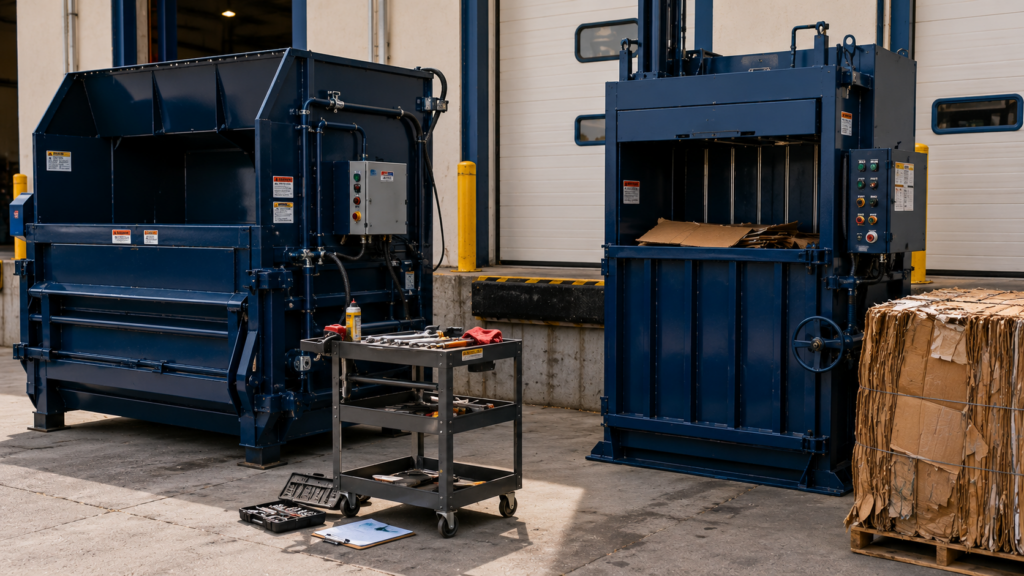
Waste equipment is one of the hardest-working pieces of machinery at many commercial properties. Whether you operate a restaurant, retail store, apartment complex, warehouse, manufacturing facility, or recycling center, your compactor or baler is likely used every day. Because these machines work so hard, they also experience constant wear and tear.
Unfortunately, many businesses don’t think about maintenance until something stops working.
A compactor that suddenly refuses to cycle or a baler that won’t compress cardboard can quickly bring operations to a halt. Overflowing waste, delayed pickups, employee frustration, and emergency repair costs often follow shortly afterward.
The good news is that most major equipment failures don’t happen overnight. In many cases, they’re the result of small maintenance issues that go unnoticed over time.
That’s why preventative maintenance is one of the smartest investments a business can make.
Regular service helps identify problems before they become expensive repairs, extends the life of your equipment, improves workplace safety, and keeps your waste management system operating efficiently.
In this guide, we’ll explain why preventative maintenance matters, common causes of equipment failure, warning signs to watch for, and practical baler maintenance tips that can help your business avoid costly downtime.
Why Preventative Maintenance Matters
Commercial compactors and balers are significant investments. Replacing either piece of equipment can cost thousands of dollars, not to mention the disruption that comes with unexpected downtime.
Preventative maintenance focuses on keeping equipment in good working condition through scheduled inspections and routine service instead of waiting until something breaks.
This proactive approach offers several important benefits.
Reduce Expensive Repairs
Small problems are almost always cheaper to fix than major equipment failures.
For example, replacing a worn hydraulic hose during routine maintenance is far less expensive than repairing an entire hydraulic system after a hose bursts and contaminates other components.
Regular inspections catch these problems early.
Extend Equipment Life
Like any commercial equipment, compactors and balers last much longer when they receive proper care.
Routine maintenance helps reduce wear on moving parts, protects hydraulic systems, and keeps electrical components functioning properly.
Many well-maintained compactors remain in service for decades.
Minimize Equipment Downtime
Every hour your waste equipment isn’t working affects your business.
Overflowing trash can create health hazards, reduce employee productivity, interrupt recycling programs, and even affect customer impressions.
Preventative maintenance greatly reduces unexpected breakdowns and keeps operations running smoothly.
Improve Workplace Safety
Compactors and balers operate under tremendous pressure.
Ignoring worn safety switches, damaged hydraulic lines, or faulty electrical components can create serious safety hazards for employees.
Routine inspections ensure safety systems continue functioning as designed.
Common Causes of Compactor Failure
If you’ve ever searched online for “compactor not working,” you’re not alone.
Most compactor failures result from a handful of common issues.
Lack of Routine Maintenance
This is by far the biggest reason commercial compactors fail.
Small maintenance tasks that are ignored month after month eventually lead to expensive repairs.
Hydraulic Problems
Hydraulic systems power nearly every movement inside a compactor.
Common issues include:
- Hydraulic fluid leaks
- Low fluid levels
- Damaged hoses
- Worn seals
- Contaminated hydraulic oil
These problems reduce performance and place extra strain on the system.
Electrical Issues
Modern compactors rely on electrical controls for safe operation.
Common electrical problems include:
- Loose wiring
- Faulty sensors
- Damaged limit switches
- Failed control boards
Even a simple electrical fault can prevent the machine from operating.
Overloading the Equipment
Every compactor has design limits.
Trying to compress materials beyond its rated capacity creates unnecessary stress on hydraulic cylinders, motors, and structural components.
Consistently overloading equipment shortens its lifespan.
Lack of Cleaning
Waste buildup may seem harmless, but over time debris can interfere with moving parts, sensors, and hydraulic components.
Keeping equipment clean is one of the easiest ways to prevent future problems.
Common Baler Problems
Balers experience many of the same issues as compactors.
However, they also have unique maintenance requirements because of the materials they process.
Common problems include:
- Broken bale wire systems
- Hydraulic leaks
- Worn ram guides
- Jammed cardboard
- Sensor failures
- Door latch problems
Routine inspections significantly reduce these issues.
Baler Maintenance Tips Every Business Should Follow
Proper baler maintenance doesn’t have to be complicated.
Simple inspections performed consistently make a big difference.
Keep the Equipment Clean
Dust, cardboard scraps, plastic wrap, and debris accumulate quickly around balers.
Cleaning around moving parts helps prevent jams and reduces wear.
Employees should remove loose debris regularly while following proper lockout procedures.
Inspect Hydraulic Hoses
Hydraulic hoses should be checked for:
- Cracks
- Leaks
- Bulges
- Abrasion
Replacing worn hoses before they fail helps prevent major repairs.
Lubricate Moving Parts
Many moving components require regular lubrication.
Proper lubrication reduces friction, minimizes wear, and improves equipment performance.
Always follow manufacturer recommendations for lubrication intervals.
Inspect Safety Features
Safety systems should never be bypassed.
Inspect:
- Emergency stop buttons
- Door switches
- Safety interlocks
- Warning labels
If any safety feature isn’t working properly, stop using the equipment until repairs are completed.
Watch for Unusual Noises
Grinding, squealing, banging, or popping noises often indicate developing mechanical problems.
Investigating these sounds early may prevent larger failures later.
Warning Signs Your Compactor Needs Service
Equipment usually provides warning signs before complete failure.
Watch for:
- Slow cycling
- Reduced compaction force
- Hydraulic leaks
- Strange noises
- Frequent fault codes
- Doors that won’t latch
- Electrical problems
- Unusual vibrations
- Burning smells
Addressing these issues early often saves money.
Signs Your Baler Needs Repair
Common indicators include:
- Loose or uneven bales
- Ram movement issues
- Hydraulic fluid leaks
- Wire tying problems
- Slow compression
- Sensor errors
- Failure to complete cycles
Don’t ignore these warning signs.
How Often Should Waste Equipment Be Serviced?
One of the most common questions businesses ask is how often preventative maintenance should be performed.
The answer depends on:
- Equipment age
- Daily usage
- Material type
- Operating environment
Most commercial equipment benefits from:
Daily
- Visual inspection
- Remove debris
- Check for leaks
Weekly
- Inspect moving parts
- Check safety switches
- Monitor hydraulic fluid
Monthly
- Lubrication
- Hose inspection
- Electrical inspection
Annually
- Comprehensive professional inspection
- Hydraulic testing
- Preventative maintenance service
- Replacement of worn components
High-volume facilities may require more frequent servicing.
Why Professional Waste Equipment Service Matters
Although daily inspections are important, professional maintenance provides a much more comprehensive evaluation.
Experienced technicians inspect components most employees wouldn’t recognize as potential failure points.
Professional service typically includes:
- Hydraulic system testing
- Electrical diagnostics
- Cylinder inspection
- Pressure adjustments
- Safety system verification
- Structural inspection
- Lubrication
- Component replacement recommendations
Professional maintenance often identifies problems months before equipment failure.
The Cost of Waiting Too Long
Some businesses postpone maintenance because they want to avoid service costs.
Ironically, that decision usually results in higher expenses later.
Ignoring preventative maintenance can lead to:
- Emergency service calls
- Expensive replacement parts
- Lost productivity
- Equipment downtime
- Overflowing dumpsters
- Increased hauling costs
- Customer complaints
- Workplace safety concerns
Preventative maintenance is almost always less expensive than emergency repairs.
Industries That Benefit Most from Preventative Maintenance
Nearly every commercial industry benefits from routine waste equipment service.
These include:
- Restaurants
- Grocery stores
- Retail stores
- Hospitals
- Apartment communities
- Hotels
- Warehouses
- Manufacturing facilities
- Distribution centers
- Recycling operations
If your equipment operates daily, preventative maintenance should be part of your operating budget.
Why Work with a Local Commercial Equipment Repair Company?
Working with a local provider offers faster response times and personalized service.
Jackson Compaction provides commercial equipment repair and preventative maintenance programs throughout Albuquerque, helping businesses keep compactors, balers, and waste equipment operating at peak performance.
Routine inspections, scheduled maintenance, and experienced technicians help reduce downtime while extending equipment life.
Final Thoughts
Preventative maintenance isn’t just about preventing breakdowns—it’s about protecting your investment.
Routine service keeps compactors and balers operating efficiently, reduces costly repairs, improves workplace safety, and helps businesses avoid unnecessary downtime.
Whether your equipment processes cardboard every day or handles hundreds of pounds of commercial waste each week, regular inspections and professional maintenance can significantly extend its lifespan.
Waiting until your compactor stops working is almost always the most expensive option.
By investing in preventative maintenance today, your business can avoid emergency repairs tomorrow.
Contact Jackson Compaction
If your compactor or baler needs maintenance, repairs, or a professional inspection, Jackson Compaction is here to help. Our experienced technicians provide dependable waste equipment service, preventative maintenance programs, and commercial equipment repair throughout Albuquerque and surrounding areas.
Call Jackson Compaction today at (505) 345-3900 to schedule preventative maintenance and keep your equipment operating safely and efficiently.